Spring-Loaded Safety Relief Valves
Spring-loaded safety valves engineered from set pressure to final documentation.
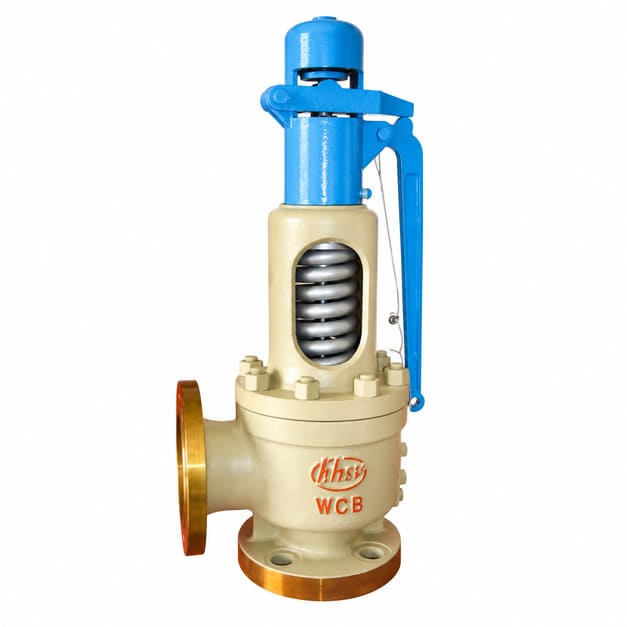
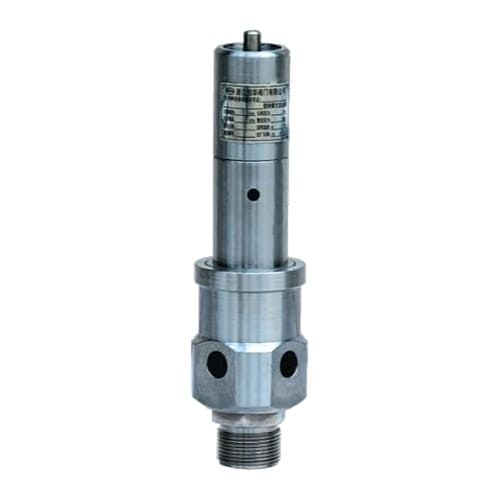
HHSV supports engineers, OEMs, EPC teams and procurement with spring-loaded safety relief valves in low-lift, full-lift, Spanner, external-thread and duplex arrangements. Compare the available product records, then confirm the exact model, relieving capacity, materials, connections and compliance scope for the service.
Selection Basis
Select the operating principle, configuration and service range from one engineering basis.
SPRING-LOADED PRODUCT RANGE
Explore the spring-loaded safety valve range.
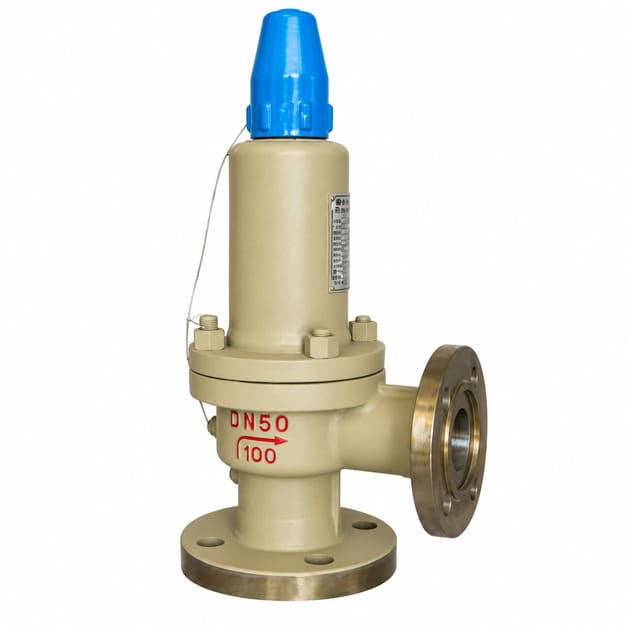
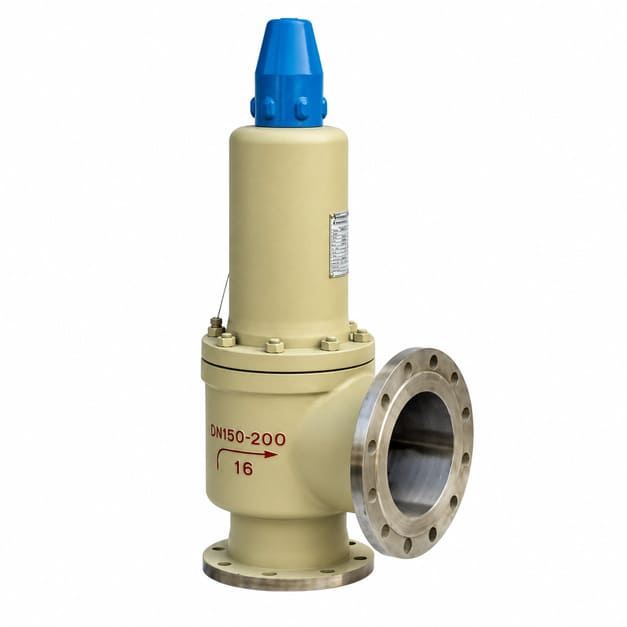
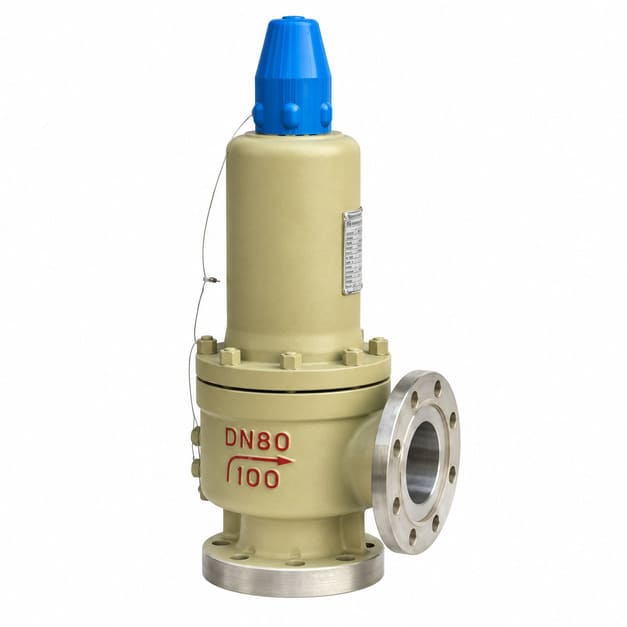
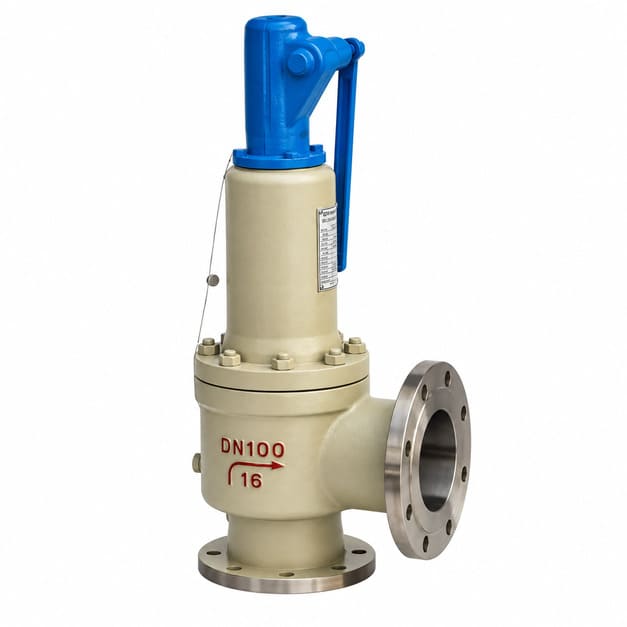
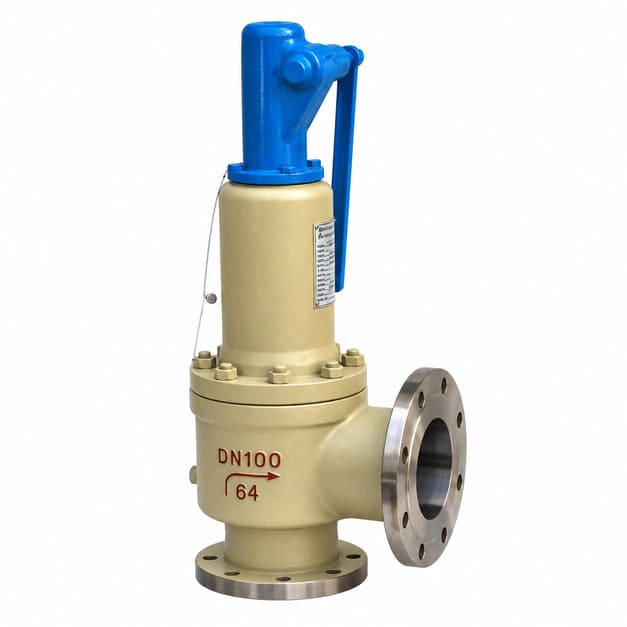
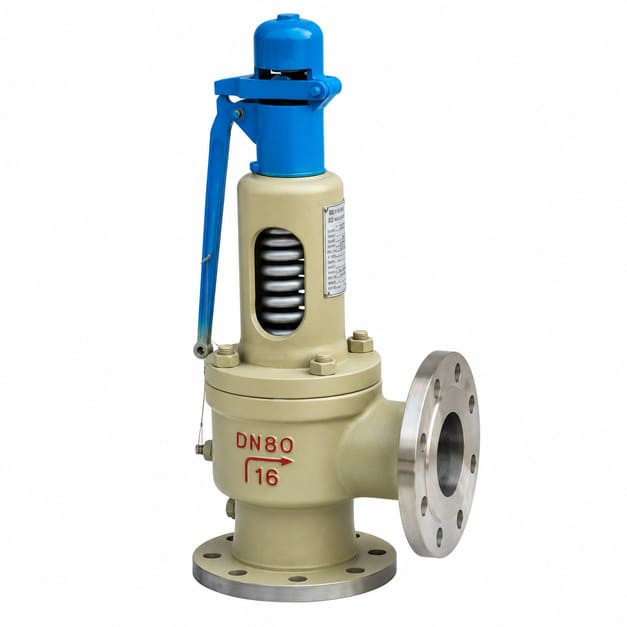
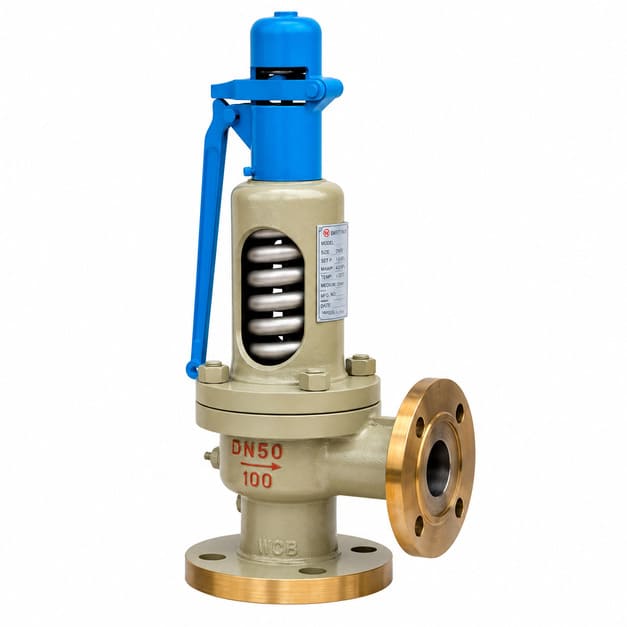
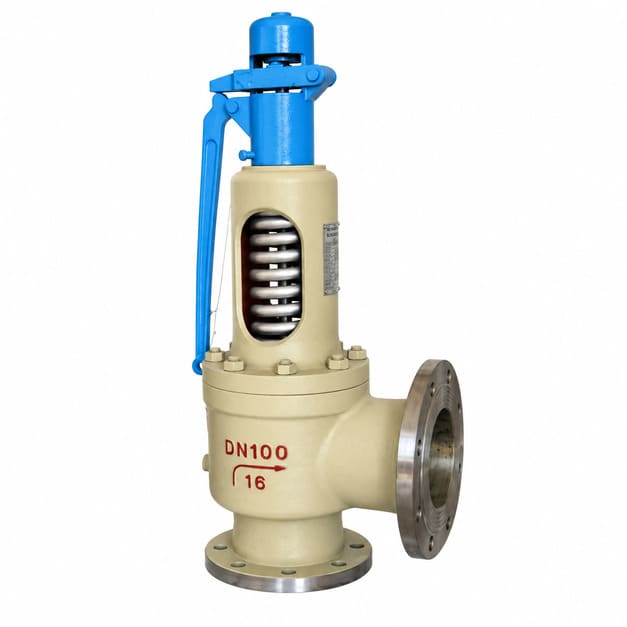
Compare the available models and open a product page for dimensions, ratings and service details.
How It Works
A calibrated spring supplies the closing force; process pressure supplies the opening force.
The set point is created by spring compression acting through the spindle onto the disc. Pressure at the inlet acts on the seating area. As the protected system reaches the valve’s set condition, opening forces overcome the effective closing force; the disc lifts and relieves capacity. As pressure falls, spring force again dominates and the disc reseats. The exact lift, overpressure and blowdown behavior depends on the model and applicable standard – not on the category name alone.
01 / NORMAL OPERATION
Closed
During normal operation, spring preload holds the disc against the seat.
02 / SET CONDITION
Approaching set
At the specified set condition, the valve meets its applicable opening criterion. This does not mean that the full rated capacity has already been reached.
03 / PRESSURE RELIEF
Relieving
As pressure rises through the specified overpressure range, the valve develops its model-specific lift and discharge capacity.
04 / RECLOSING
Reseating
As inlet pressure falls to the model-specific reseating condition, the spring closes the disc. Blowdown describes the difference between set and reseating pressure.
Construction
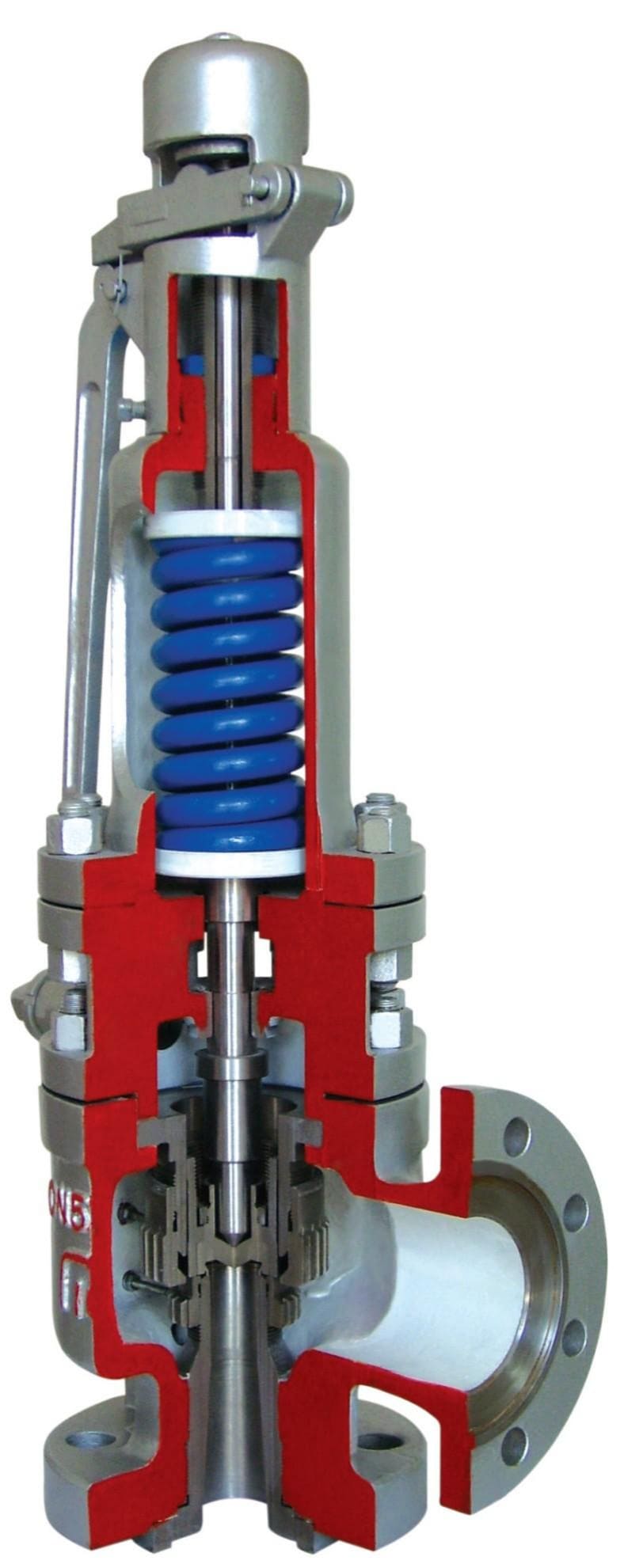
Proven spring-loaded architecture, configured for each service.
Body & inlet nozzle
Pressure boundary and flow entrance; connection and material are series specific.
Disc & seat
Create the pressure seal and control the initial opening interface.
Spindle / stem & guide
Transmit spring force and maintain moving-part alignment.
Spring & spring washers
Provide calibrated closing force; range and material depend on the model.
Adjusting screw / cap
Used to establish spring compression and protect the setting mechanism.
Spanner & model-specific parts
Spanners and other model-specific components must match the selected valve drawing and operating instructions.
Product Configurations
Find the configuration for your application.
Explore the current spring-loaded range by lift, lifting device, connection and assembly. Each group links to the available product records so you can compare its pressure group, size and service limits.
Closed full lift
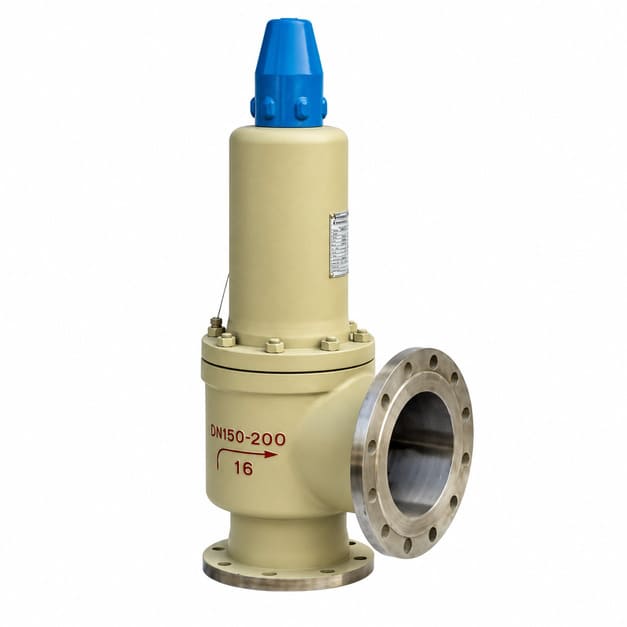
A42Y offers full-lift operation in a closed design with flanged connections. Compare the PN16/25/40 and PN64/100 product groups, then select the size and material version for the required service.
Full lift with spanner
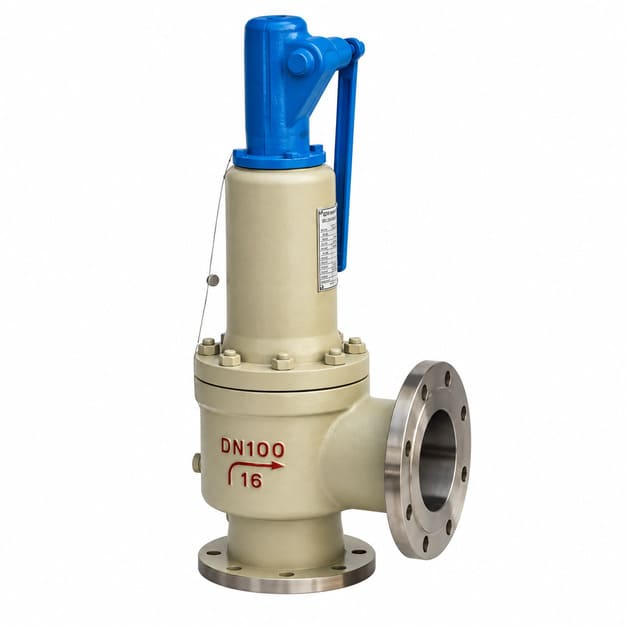
A44Y combines an enclosed full-lift design with a spanner. A48Y provides full-lift operation with a spanner for steam and air service. Both series have separate PN16/25/40 and PN64/100 product groups.
Closed low lift
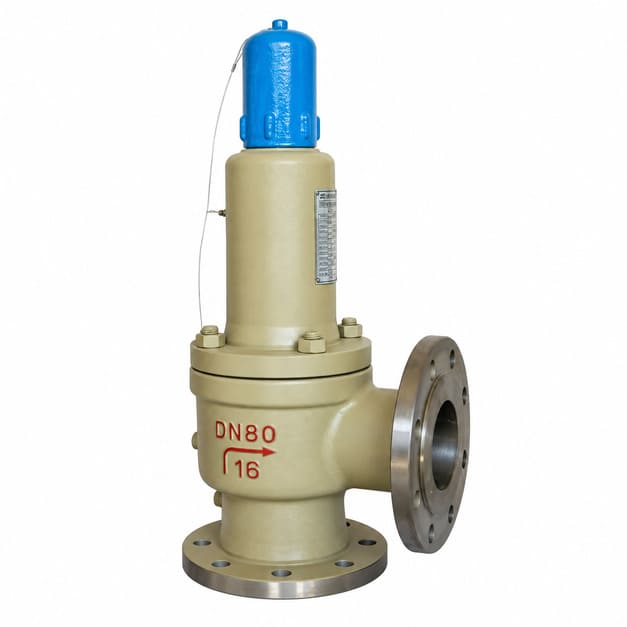
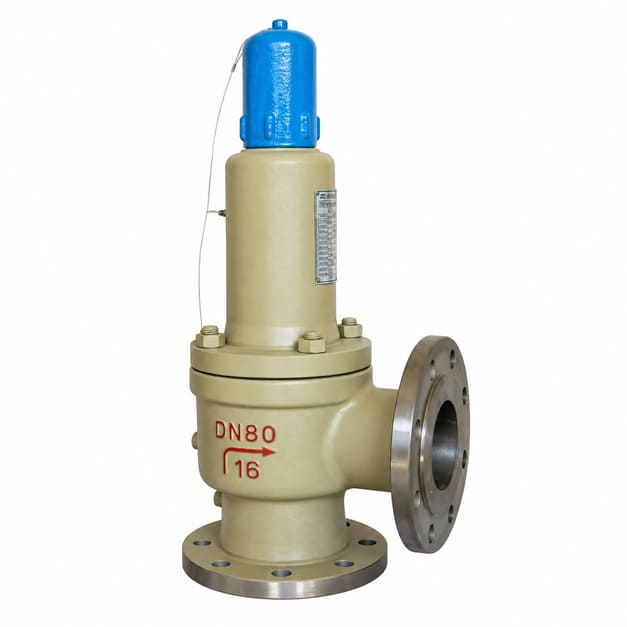
A41H and A41Y provide low-lift operation in a closed design with flanged connections. A41H covers the PN16/25/40 group; A41Y covers PN64/100. Check the selected material version for its medium and temperature limits.
Low lift with spanner
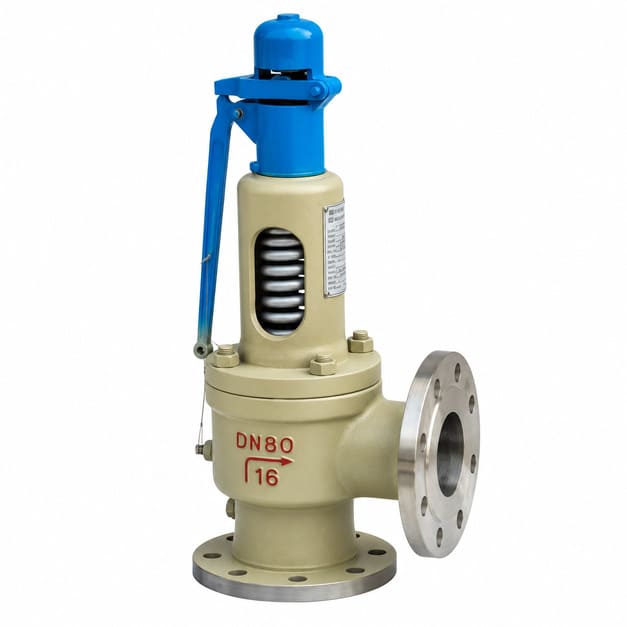
A47H and A47Y combine low-lift operation, a spanner and flanged connections for steam and air service. Compare A47H PN16/25/40 with A47Y PN64/100, including the different size ranges.
External-thread valves
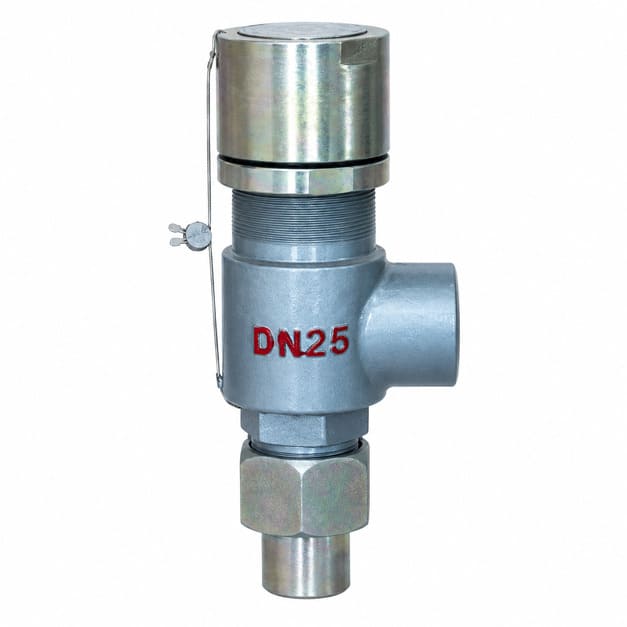
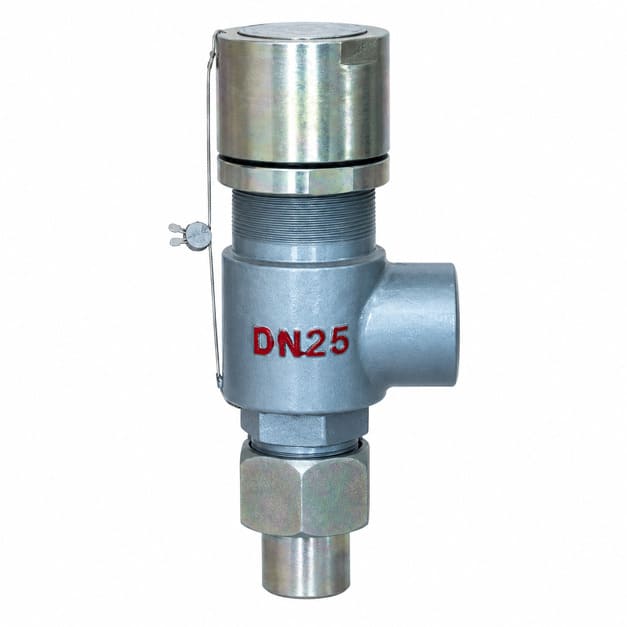
A21 provides low-lift protection with external-thread connections and model-specific service limits. AQ-20 is an external-thread safety valve for air compressors. Open each product page to compare its sizes, connections and available operating data.
Duplex assemblies
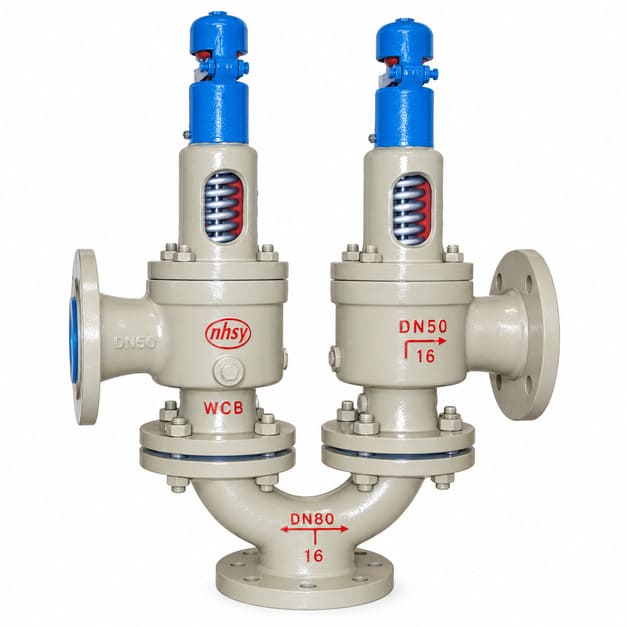
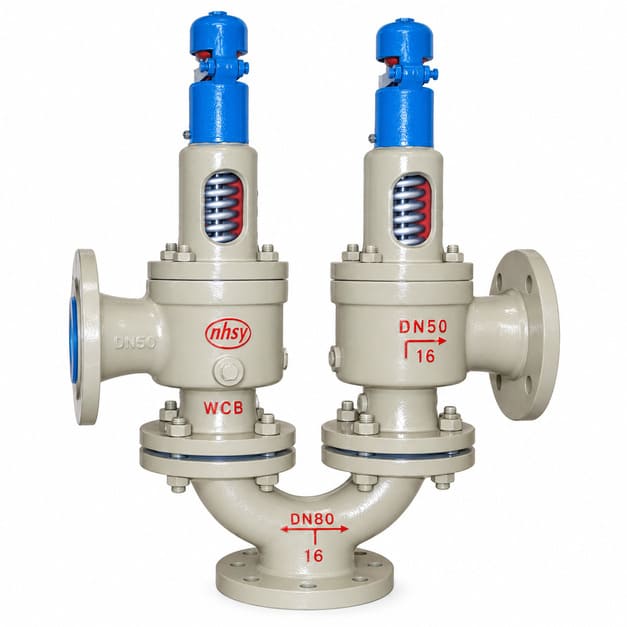
A37H, A38Y and A43H duplex assemblies mount two valves of the same model and size on a Y-type joint. The common inlet and each valve outlet have separate dimensions. The listed group covers PN16/25/40.
Start with the construction and connection your application needs, then compare the linked product records. Where a series has two pressure groups, review each group separately. Required capacity and service suitability remain part of model-specific selection.
Product Models & Specification Matrix
Compare the product model, connection size and operating range.
Compare the published products below. Expand a row for complete model codes, temperature, connections and other available details, then open the product page to review its full specifications.
ModelA21H / A21W / A21FProduct / constructionA21 Low Lift External Thread Safety ValveMediumAir, Corrosive Media, Gas, Liquid, LPGSize rangeDN15–DN25Rating / pressureA21H/A21W: PN16/25/40/64/100 (1.6/2.5/4.0/6.4/10.0 MPa); A21F: PN16/25/40 (1.6/2.5/4.0 MPa)
- Full model codes
- A21H-16/25/40/64/100-CA21W-16/25/40/64/100-P/RA21F-16/25/40-C/P/R
- Temperature
- A21H/A21W: ≤200 °C; A21F: ≤80 °C
- Connection
- External Thread
Spring loaded low lift safety valve with external thread connections for overpressure protection of equipment and pipelines. Available in DN15–DN25, with pressure, temperature and material options depending on the A21H, A21W or A21F model.
ModelA37H / A38Y / A43HProduct / constructionA37H/A38Y/A43H Duplex Spring Safety Valve (PN16/25/40)MediumAir, SteamSize rangeY-joint inlet: DN50–DN150; Outlet per valve: DN32–DN125 (A37H/A43H), DN40–DN125 (A38Y)Rating / pressurePN16 / PN25 / PN40 (1.6 / 2.5 / 4.0 MPa)
- Full model codes
- A37H-16/25/40-CA38Y-16/25/40-CA43H-16/25/40-C
- Temperature
- ≤ 350 °C
- Connection
- Flanged
Duplex spring safety valve assembly with two safety valves of the same model and size mounted on a Y-type joint. Designed for steam and air overpressure protection at temperatures up to 350°C, with PN16, PN25 and PN40 ratings and a common inlet size range of DN50–DN150.
ModelA41HProduct / constructionA41H Low Lift Closed Safety Valve (PN16/25/40)MediumAir, Corrosive Media, LiquidSize rangeDN20–DN250Rating / pressurePN16 / PN25 / PN40 (1.6 / 2.5 / 4.0 MPa)
- Full model codes
- A41H-16/25/40-C/P/R
- Temperature
- ≤300 °C; P/R versions: ≤200 °C
- Connection
- Flanged
Spring loaded low lift safety valve with a closed design and flanged connections for equipment and pipeline overpressure protection. Available in PN16, PN25 and PN40, with nominal sizes from DN20 to DN250.
ModelA41YProduct / constructionA41Y Low Lift Closed Safety Valve (PN64/100)MediumAir, Corrosive Media, LiquidSize rangeDN20–DN150Rating / pressurePN64 / PN100 (6.4 / 10.0 MPa)
- Full model codes
- A41Y-64/100-C/P/R
- Temperature
- ≤300 °C; P/R versions: ≤200 °C
- Connection
- Flanged
Spring loaded low lift safety valve with a closed design and flanged connections for equipment and pipeline overpressure protection. Available in PN64 and PN100, with nominal sizes from DN20 to DN150. Temperature limits and applicable media depend on the body material version.
ModelA42YProduct / constructionA42Y Full Lift Closed Safety Valve (PN16/25/40)MediumAir, Corrosive Media, Gas, LiquidSize rangeInlet: DN20–DN400; Outlet: DN25–DN500Rating / pressurePN16 / PN25 / PN40 (1.6 / 2.5 / 4.0 MPa)
- Full model codes
- A42Y-16/25/40-C/P/R
- Temperature
- C: ≤300 °C; P/R: ≤200 °C
- Connection
- Flanged
Spring loaded full lift safety valve with a closed design and flanged connections for equipment and pipeline overpressure protection. Available in PN16, PN25 and PN40 with inlet sizes from DN20 to DN400, for air, petroleum gas and liquids up to 300°C in C versions, or corrosive media up to 200°C in P/R versions.
ModelA42YProduct / constructionA42Y Full Lift Closed Safety Valve (PN64/100)MediumAir, Corrosive Media, Gas, LiquidSize rangeInlet: DN20–DN150; Outlet: DN25–DN200Rating / pressurePN64 / PN100 (6.4 / 10.0 MPa)
- Full model codes
- A42Y-64/100-C/P/R
- Temperature
- C: ≤300 °C; P/R: ≤200 °C
- Connection
- Flanged
Spring loaded full lift safety valve with a closed design and flanged connections for equipment and pipeline overpressure protection. Available in PN64 and PN100 with inlet sizes from DN20 to DN150, for air, petroleum gas and liquids up to 300°C in C versions, or corrosive media up to 200°C in P/R versions.
ModelA44YProduct / constructionA44Y Spring Full Lift Enclosed Safety Valve with Spanner (PN16/25/40)MediumAir, Corrosive Media, Liquid, SteamSize rangeInlet: DN20–DN400; Outlet: DN25–DN500Rating / pressurePN16 / PN25 / PN40 (1.6 / 2.5 / 4.0 MPa)
- Full model codes
- A44Y-16/25/40-C/P/R
- Temperature
- C: ≤300 °C; P/R: ≤200 °C
- Connection
- Flanged
Spring loaded full lift enclosed safety valve with a spanner and flanged connections for overpressure protection. Available in PN16, PN25 and PN40 with inlet sizes from DN20 to DN400, for air, steam and petroleum up to 300°C in C versions, or corrosive media up to 200°C in P/R versions.
ModelA44YProduct / constructionA44Y Spring Full Lift Enclosed Safety Valve with Spanner (PN64/100)MediumAir, Corrosive Media, Liquid, SteamSize rangeInlet: DN20–DN150; Outlet: DN25–DN200Rating / pressurePN64 / PN100 (6.4 / 10.0 MPa)
- Full model codes
- A44Y-64/100-C/P/R
- Temperature
- C: ≤300 °C; P/R: ≤200 °C
- Connection
- Flanged
Spring loaded full lift enclosed safety valve with a spanner and flanged connections for overpressure protection. Available in PN64 and PN100 with inlet sizes from DN20 to DN150, for air, steam and petroleum up to 300°C in C versions, or corrosive media up to 200°C in P/R versions.
ModelA47HProduct / constructionA47H Low Lift Safety Valve with Spanner (PN16/25/40)MediumAir, SteamSize rangeDN20–DN250Rating / pressurePN16 / PN25 / PN40 (1.6 / 2.5 / 4.0 MPa)
- Full model codes
- A47H-16/25/40-C
- Temperature
- ≤ 350 °C
- Connection
- Flanged
Spring loaded low lift safety valve with a spanner and flanged connections for steam and air service. Designed for equipment and pipeline overpressure protection at temperatures up to 350°C, with PN16, PN25 and PN40 ratings and sizes from DN20 to DN250.
ModelA47YProduct / constructionA47Y Low Lift Safety Valve with Spanner (PN64/100)MediumAir, SteamSize rangeDN20–DN150Rating / pressurePN64 / PN100 (6.4 / 10.0 MPa)
- Full model codes
- A47Y-64/100-C
- Temperature
- ≤ 350 °C
- Connection
- Flanged
Spring loaded low lift safety valve with a spanner and flanged connections for steam and air service. Designed for equipment and pipeline overpressure protection at temperatures up to 350°C, with PN64 and PN100 ratings and sizes from DN20 to DN150.
ModelA48YProduct / constructionA48Y Full Lift Safety Valve with Spanner (PN16/25/40)MediumAir, SteamSize rangeInlet: DN20–DN400; Outlet: DN25–DN500Rating / pressurePN16 / PN25 / PN40 (1.6 / 2.5 / 4.0 MPa)
- Full model codes
- A48Y-16/25/40-C
- Temperature
- ≤ 350 °C
- Connection
- Flanged
Spring loaded full lift safety valve with a spanner and flanged connections for steam and air service. Designed for equipment and pipeline overpressure protection at temperatures up to 350°C, with PN16, PN25 and PN40 ratings and inlet sizes from DN20 to DN400.
ModelA48YProduct / constructionA48Y Full Lift Safety Valve with Spanner (PN64/100)MediumAir, SteamSize rangeInlet: DN20–DN150; Outlet: DN25–DN200Rating / pressurePN64 / PN100 (6.4 / 10.0 MPa)
- Full model codes
- A48Y-64/100-C
- Temperature
- ≤ 350 °C
- Connection
- Flanged
Spring loaded full lift safety valve with a spanner and flanged connections for steam and air service. Designed for equipment and pipeline overpressure protection at temperatures up to 350°C, with PN64 and PN100 ratings and inlet sizes from DN20 to DN150.
ModelAQ-20Product / constructionAQ-20 Air Compressor Safety ValveMediumAirSize rangeDN20, DN25Rating / pressure
- Full model codes
- AQ-20
- Temperature
- ≤ 200 °C
- Connection
- External Thread
Safety valve for air compressors handling air at temperatures up to 200°C. It opens automatically when pressure exceeds the allowable value and closes as pressure falls to the specified value. Available in DN20 and DN25 with external thread connections.
Duplex Safety-Valve Assembly
A37H / A38Y / A43H Duplex Spring Safety Valve
This assembly mounts two safety valves of the same model and size on a Y-type joint for steam and air service. The listed assembly inlet is DN50–DN150, with PN16, PN25 and PN40 ratings and a temperature limit of 350°C. Confirm the required relieving capacity and each valve outlet for the selected model.
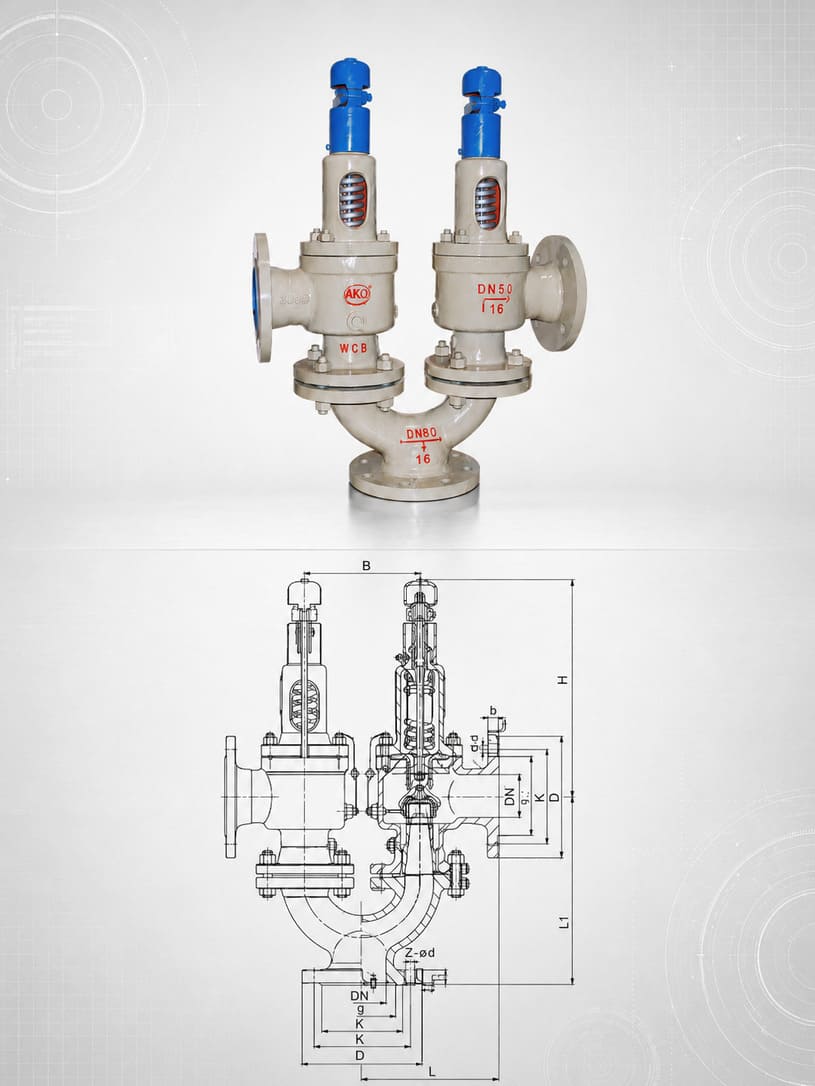
A37H / A38Y / A43H · Steam & Air
Two matching safety valves share a Y-type inlet joint.
The assembly nominal diameter is the Y-joint inlet diameter. Each valve has its own outlet: DN32–DN125 for A37H/A43H and DN40–DN125 for A38Y. Confirm the size combination, discharge arrangement and installation dimensions in the selected drawing.
Series
A37H / A38Y / A43H
Medium
Steam · Air
Assembly
Two valves · Y-joint
Y-joint inlet
DN50–DN150
Pressure
PN16 / 25 / 40
Temperature
≤350°C
When to review the duplex assembly
Review this assembly when the system arrangement calls for two matching safety valves on a common Y-type inlet. Verify required capacity, pressure–temperature rating, outlet piping and installation space for the selected configuration.
Selection Inputs
Provide the medium, required relieving capacity, operating and set pressure, relieving temperature, backpressure, Y-joint inlet and individual valve outlets, materials and inspection requirements.
Technical Submittal
HHSV can issue the selected model datasheet, sizing basis, GA drawing, material specification, test scope, compliance status and agreed final documentation package.
Product boundary: the listed values apply to the A37H/A38Y/A43H assembly record. Final size combinations, relieving capacity, discharge arrangement and compliance scope must match the selected model and approved documents.
Portfolio-Wide Manufacturing Capability
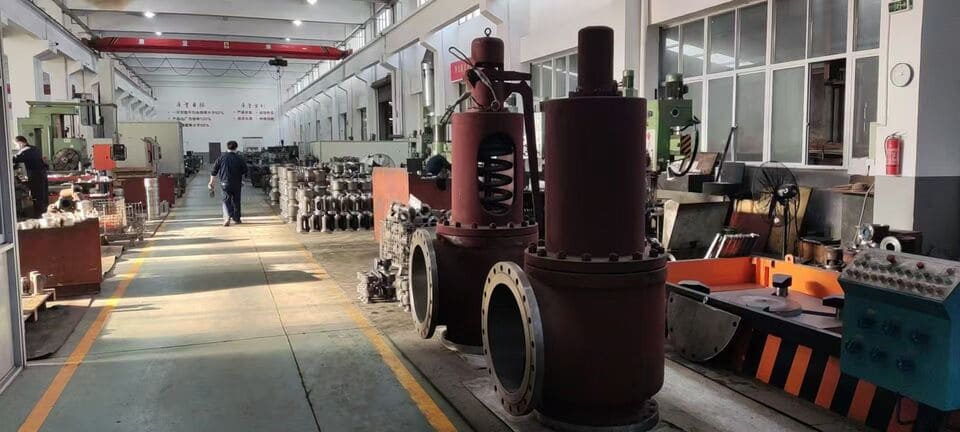
Company-wide capability, separate from individual product ratings.
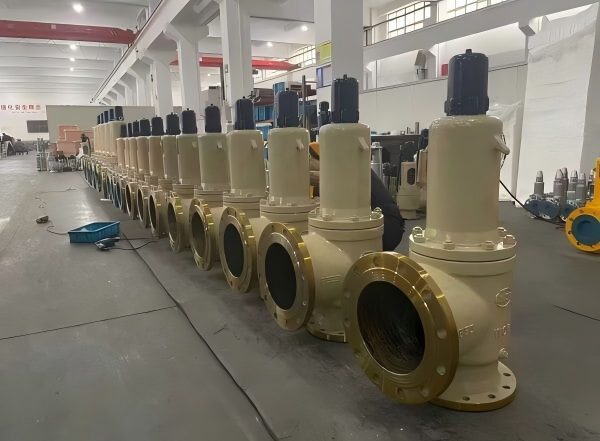
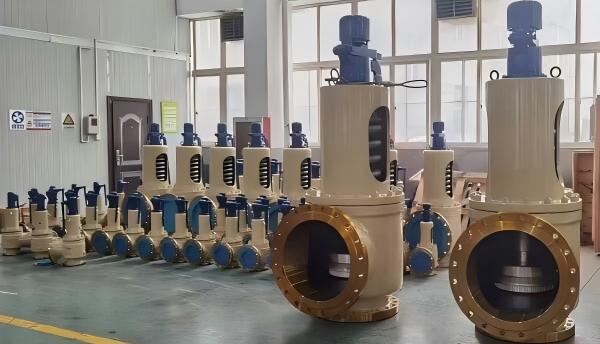
The ranges below describe HHSV’s overall manufacturing portfolio. Each spring-loaded product has its own documented size, pressure, temperature and material limits. Use the product matrix and selected model documentation for this page’s product selection.
Overall HHSV size envelope
DN10-600
1/2-24 in
Overall HHSV pressure envelope
0.6-42 MPa
ASME Class 150-2500
Overall HHSV temperature envelope
−196 to 570°C
Model/material dependent
Media
Steam · Gas · Liquid
Corrosive/toxic service by review
Body-material options
WCB · LCB/LC2 · WC6/WC9 · CF grades
Duplex · Monel · Hastelloy options
Connections
Flanged · Threaded · project-specific
Series/drawing dependent
Conventional vs Balanced Bellows
Select conventional or balanced-bellows construction for the actual backpressure condition.
Superimposed and built-up backpressure must be quantified during selection. A conventional design can be affected by outlet pressure. Where the specific design allows it, a Balanced Bellows construction is used to reduce the effect of backpressure on set behavior and can also isolate bonnet internals from process media. Allowable backpressure is model specific.
Conventional spring-loaded
Use only within the model’s stated backpressure and discharge-system limits. Confirm outlet pressure before sizing and configuration.
Balanced-bellows spring-loaded
Where a balanced-bellows design is proposed, confirm its documented balancing function, allowable backpressure, bellows material and failure considerations. Bellows construction must be verified for the exact proposed product.
Sizing & Selection
Relieving-case sizing determines the required area and valve configuration.
HHSV can size/select to API 520 or ISO 4126 where applicable to the project and product. Calculations state the input data, assumptions and correction factors used. Two-phase or unusual fluids require an agreed method rather than a generic shortcut.
Relieving case & capacity
Required mass/volumetric flow and the credible scenario used to establish it.
Medium & phase
Steam, gas, liquid or multiphase plus density, molecular weight, k/Cp/Cv, viscosity or other needed properties.
Pressure basis
Operating pressure, set pressure, allowable overpressure/accumulation and atmospheric reference where relevant.
Temperature
Normal and relieving temperature; material/rating must be checked at the applicable condition.
Backpressure
Superimposed + built-up, constant or variable; include outlet-system assumptions.
Mechanical / compliance
Inlet/outlet connection, material, owner standard, inspection, certification and documentation requirements.
Standards & Compliance
Clear documentation separates design basis, test scope and certified coverage.
HHSV quotation documents identify the design standard, test basis and certified scope applicable to the selected model, factory and legal entity, giving engineering and procurement teams a clear compliance trail.
API 520
Sizing/selection methodology where applicable; calculation assumptions must match the relieving case.
API 526 / ASME B16.5
API flanged product dimensions/orifice conventions and flange requirements only where the actual series uses them.
API 527
Seat-leakage test method/acceptance basis where specified; this is a test statement, not a product certification.
ISO 4126
Design/sizing/testing basis where specified for the applicable product and project.
ASME BPVC
ASME Section VIII UV and Section I V are separate authorization scopes. HHSV confirms the applicable code and marking status for the selected valve in the technical quotation.
GB/T 12241 / 12243
Available design, performance and test basis for applicable series; verify the exact series and project-required edition.
Designed to
The stated code/standard is used as the design, sizing or dimensional basis for the selected model.
Tested in accordance with
The supplied valve is tested using the stated method and acceptance criteria for the agreed scope.
Certified to
Only use when the legal entity, factory, model, pressure range and marking are within the actual certificate/authorization scope.
Quality Control & Test Documentation
Every test report is linked to the supplied valve and serial number.
Material identity, set pressure, leakage result, serial number and inspection status are controlled as deliverable evidence. The exact test medium, acceptance and witnessing requirement are defined by the applicable valve, standard and purchase specification.
Incoming material control
Material certificates, heat/lot identity and specified PMI/NDT are controlled before release to manufacture.
Pressure-boundary test
Applicable shell/pressure-boundary testing is performed to the approved product/project requirement.
Set-pressure verification
The assembled valve is adjusted and verified at its specified set pressure using the applicable test basis.
Reseating / blowdown
Reseating behavior is checked where required; acceptance limits remain standard/model specific.
Seat leakage
API 527 testing is available where applicable to the selected product/project; acceptance depends on valve type and test basis.
Witness / traceability
Third-party witness points, serial number, test records and final release documents can be agreed before manufacture.
Certification Scope
Certification support aligned with the selected model and project scope.
For qualifying spring-loaded valves, HHSV can provide CE/PED, applicable ASME UV and National Board scope evidence, Chinese safety-valve manufacturing licensing and ISO management-system certificates. The quotation identifies the certificate and marking status applicable to the selected model.
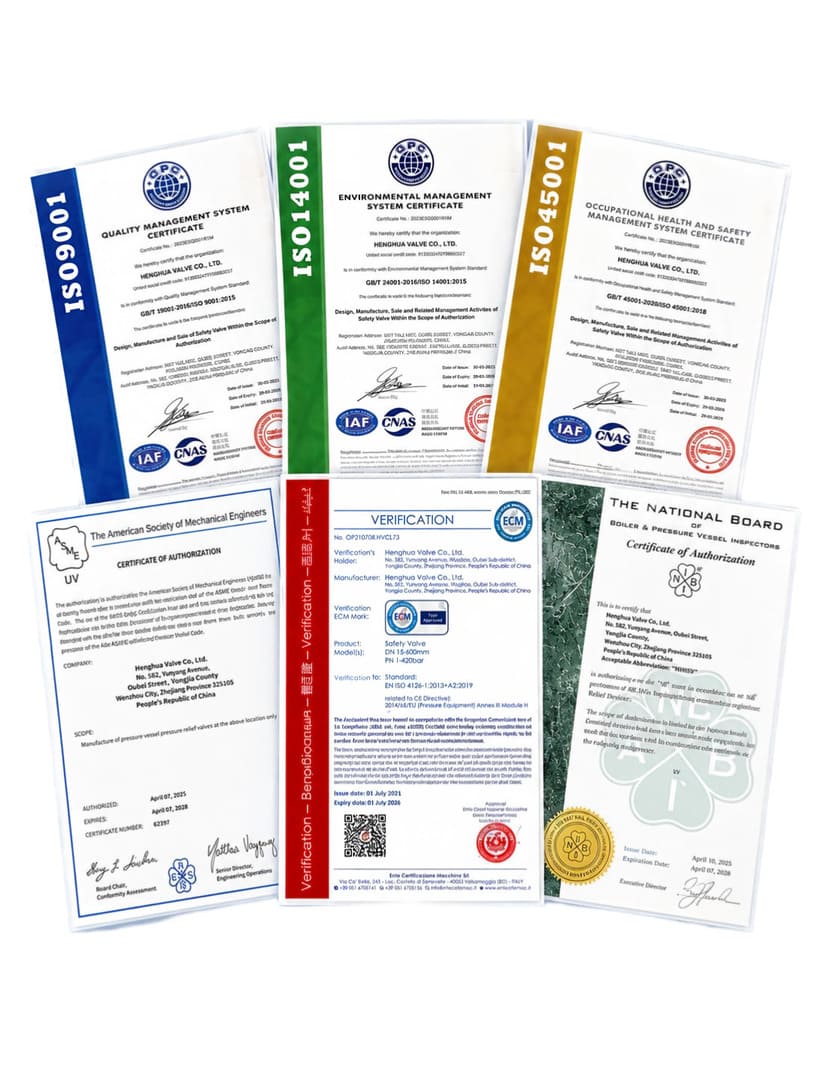
ASME UV and National Board records apply to eligible valves within their stated product, factory and marking scope.
State CE/PED only when the supplied pressure accessory falls inside the applicable conformity-assessment scope and supporting documentation.
Map the valve category/range to the applicable manufacturing-license scope used for the supplied product.
ISO 9001 / 14001 / 45001 describe management systems; they are not product-performance certificates.
Typical Applications
Match each application to the right construction, materials and service limits.
HHSV converts the application duty into a verified spring-loaded valve selection by reviewing the relieving case, materials, pressure-temperature rating, backpressure and compliance requirements.
Boilers & steam systems
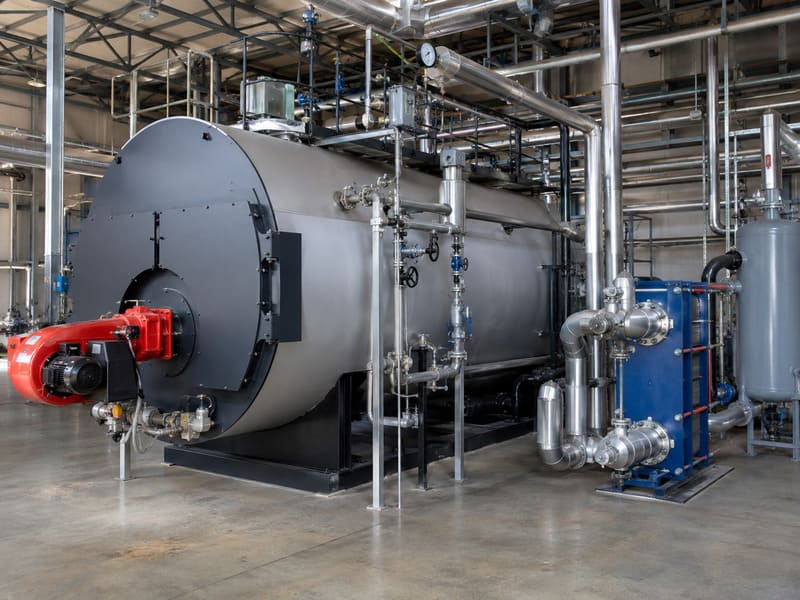
Compare the steam and air duties of A47H/A47Y and A48Y products with Spanner. Confirm the required capacity, operating range and applicable code scope for the selected valve.
Pressure vessels
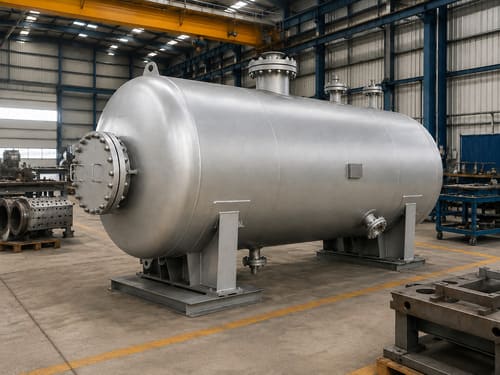
Direct spring-loaded relief for gas, steam or liquid service with model-level sizing and certificate checks.
Refining & petrochemical
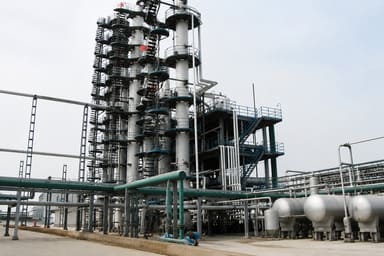
Select the documented product configuration using the relieving case, backpressure, medium, temperature and material compatibility.
Compressors & packaged equipment
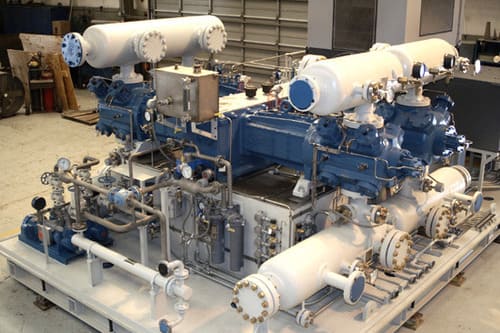
Threaded or flanged spring-loaded valves for repeat OEM/skid supply after the service basis is standardized.
Chemical service

Compare the P/R versions listed for corrosive media, then confirm compatibility with the actual fluid composition, concentration and operating temperature.
Steam-system integration

A47H/A47Y and A48Y records list steam and air service up to 350°C. Check the product’s pressure group, capacity and temperature limit against the actual equipment duty.
Dimensions & Technical Documentation
Controlled drawings define the selected inlet, outlet and orifice combination.
HHSV provides a dedicated datasheet and approved GA drawing for the selected series, covering the inlet/outlet combination, installation dimensions, orientation and connection standard needed for equipment integration.
Product datasheet
Selected model, service basis, set pressure, materials and configuration.
Sizing calculation
Relieving-case inputs, assumptions, correction factors and required area/capacity basis.
GA / dimensional drawing
Inlet/outlet sizes, face-to-face/center dimensions, overall height, orientation and connection standard.
Material records
MTC and specified PMI/NDT/heat-lot traceability for the agreed scope.
Test reports
Set, pressure-boundary, reseating/blowdown and leakage records as applicable.
Certificate matrix
Maps the quoted valve/model to the claimed product authorization or conformity scope.
QAP / ITP
Inspection stages, hold/witness points and third-party requirements where contractually required.
MDR / final dossier
Controlled document index, approved revisions, certificates and shipment-release records.
Project Delivery Experience
Review model selection, testing and documentation in relevant project records.
Available spring-loaded project references focus on engineering facts: application, selected series, service conditions, materials, testing, documentation and delivery scope. Customer identities remain confidential where required.

Process-Service References
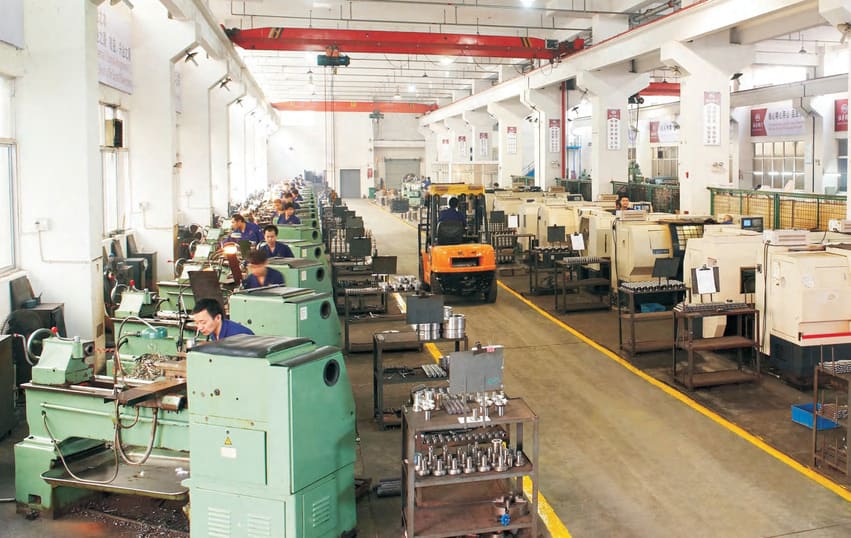
OEM Repeat-Supply References
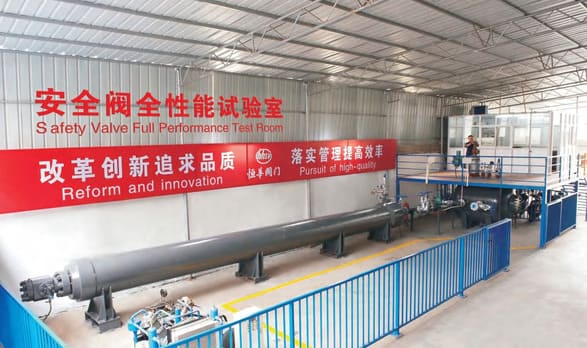
Inspection & Delivery Records
FAQ
Questions engineering and procurement teams usually need answered before approval.
How do I choose between full lift and low lift?
Start from the required relieving capacity, service medium, set pressure, applicable standard and the actual product-series data. Do not select only from nominal line size or the words "full lift" / "low lift".
When should a balanced-bellows spring-loaded valve be considered?
When backpressure or bonnet-media isolation makes it relevant. Superimposed and built-up backpressure must be quantified, then checked against the model's stated limits and bellows design.
Does API 527 mean the valve is API certified?
No. API 527 is a seat-leakage testing standard. A valve may be tested in accordance with API 527 without that statement representing a product certification.
Does ASME UV cover power-boiler Section I valves?
No. UV and V are different authorization marks. Section VIII UV coverage must not be presented as Section I V coverage.
Can the portfolio-wide DN, pressure and temperature envelope be used as a model rating?
No. Those are HHSV's overall published manufacturing limits. The selected Spring-Loaded model may cover only a subset.
What information is needed for sizing?
At minimum provide the relieving case, required capacity, medium/phase, operating and set pressure, relieving temperature, backpressure and mechanical/compliance requirements. Additional fluid properties may be required by the sizing method.
Can HHSV provide custom materials, connections or witness testing?
These can be reviewed against the selected model, manufacturing feasibility, certificate scope and project requirement. They should be defined in the quotation and approved document/inspection scope.
Related Product Paths
Compare alternative relief architectures when service conditions exceed a direct spring-loaded configuration.
Pilot-Operated Safety Valves
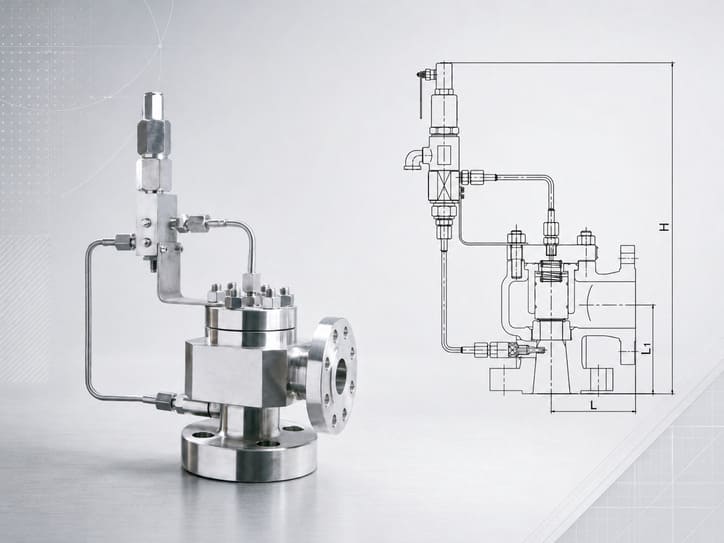
Review when the system or pressure behavior points to a pilot-controlled architecture.
Safety Reflux Valves
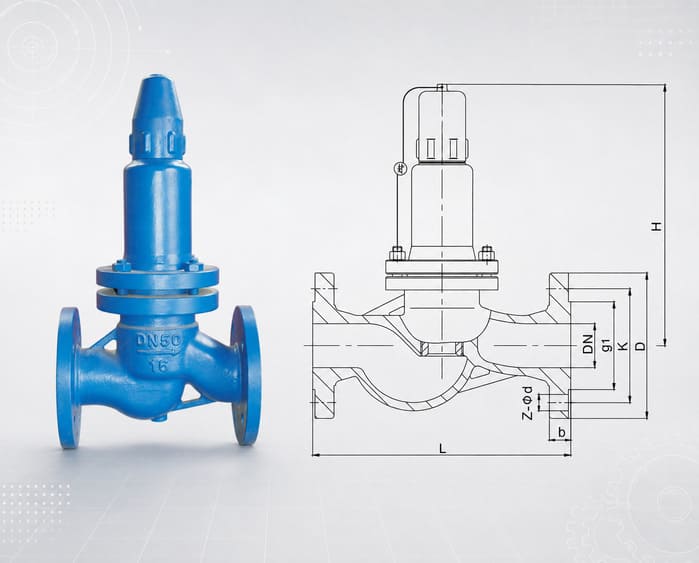
AH42F and AHN42F-P18 valves provide overpressure relief in liquid-phase return lines at LPG station pump outlets.
Custom Safety-Valve Solution
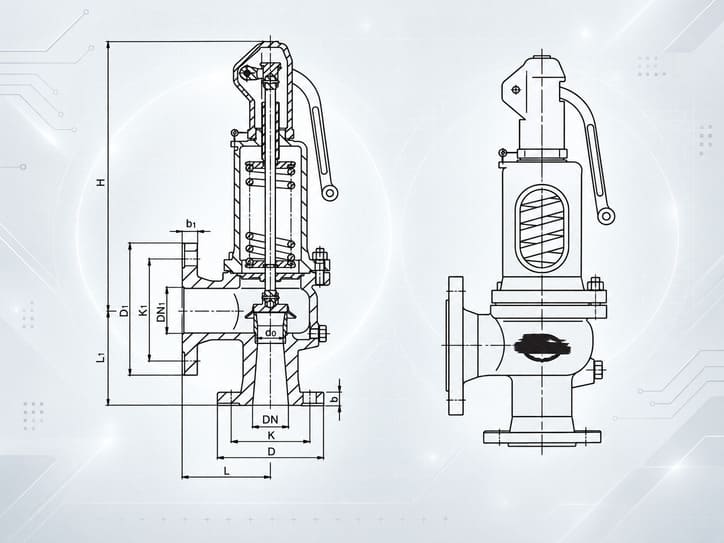
Special material, temperature, pressure, connection, inspection and document requirements can be reviewed as an engineered configuration.
Request a Technical Selection
Send the relieving case, datasheet or existing valve nameplate.
HHSV can identify missing inputs, size the required capacity, select the exact Spring-Loaded series, confirm materials/connection/compliance scope and return the technical quotation package.